Cross-Platform Data Synchronization Influences Progressive Jackpot Networks Amid Diverse State Regulations
Sofia Meier · Nov 6, 2026
Cross-Platform Data Synchronization Influences Progressive Jackpot Networks Amid Diverse State Regulations
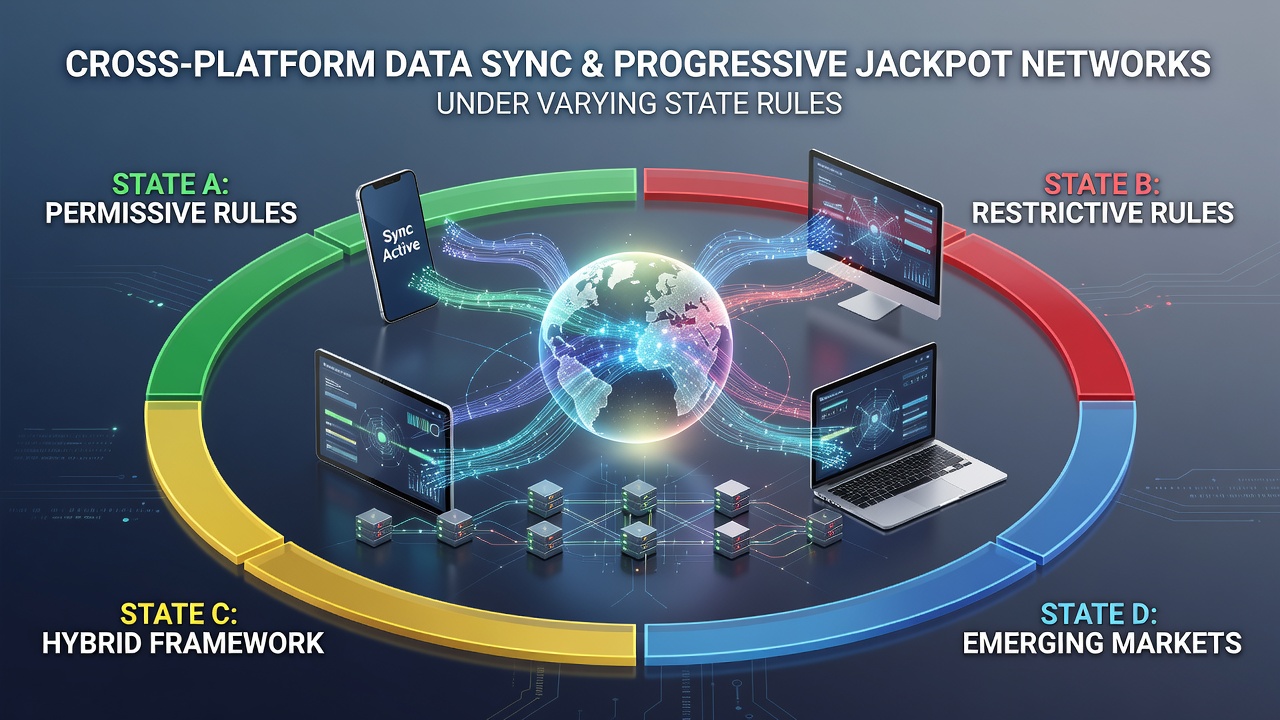
Progressive jackpot systems rely on real-time data exchange between platforms to maintain accurate prize pools, and cross-platform synchronization plays a central role in how these networks operate under separate state rules. Operators connect multiple gaming sites through secure APIs that update jackpot values continuously while each jurisdiction enforces its own licensing, taxation, and reporting requirements. Data flows must respect these boundaries because a single jackpot pool may draw contributions from players in regulated markets that impose different technical standards.
Mechanics of Cross-Platform Synchronization
Central servers aggregate bets from participating games across various operators, calculate incremental increases to the jackpot, and broadcast updated totals back to all connected platforms within seconds. Synchronization protocols use encrypted channels and timestamp verification to prevent discrepancies, while state-specific firewalls sometimes require localized data processing before information crosses into another regulatory zone. Researchers at gaming technology firms have documented that latency under 500 milliseconds remains standard for major networks, yet some states mandate additional logging steps that extend this window slightly.
State Regulatory Variations and Their Technical Effects
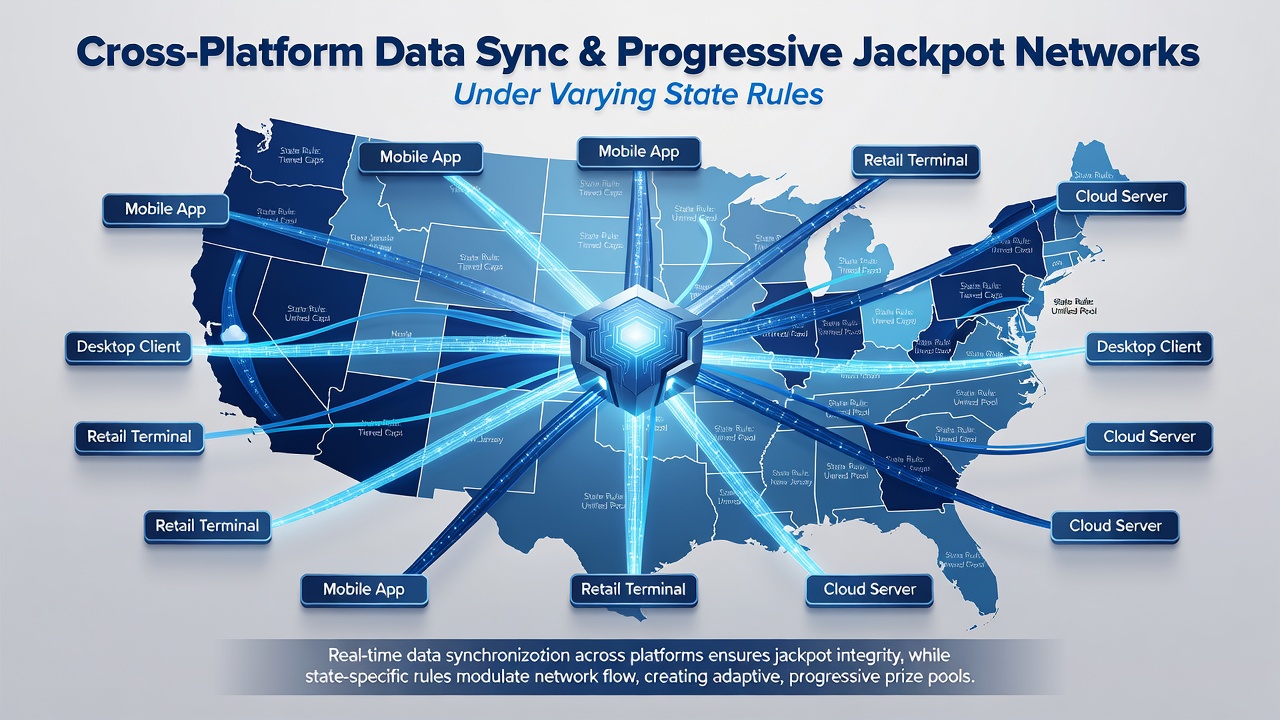
Nevada requires detailed audit trails for every jackpot contribution that originates inside its borders, which forces synchronization software to tag transactions with geolocation markers before they merge into shared pools. New Jersey applies similar tracking but adds encryption mandates that differ in key length from neighboring states, creating compatibility layers operators must maintain. Pennsylvania and Michigan each impose caps on how much of a jackpot can derive from out-of-state players, so synchronization engines split pool calculations into regional sub-pools that reconcile at the end of each reporting period.
These differences mean a single progressive network may run parallel data streams: one stream follows strict Nevada logging, another adheres to New Jersey encryption rules, and a third respects contribution limits set by Pennsylvania. Software providers update their systems quarterly to accommodate rule changes, and November 2026 brought revised data-retention schedules in two additional states that further segmented synchronization pathways.
Impact on Network Scalability and Compliance
Operators expand networks by onboarding new state-licensed sites, yet each addition requires custom integration work to satisfy local data rules. Compliance teams review synchronization logs against state audit templates, and discrepancies trigger automatic holds on jackpot growth until resolved. Industry reports from the Nevada Gaming Control Board show that networks with multi-state footprints spend 15 to 20 percent more on compliance infrastructure than single-state systems. Data from Canadian provincial regulators further illustrates that cross-border synchronization demands similar segmentation when operators serve both US and Canadian markets under separate licensing regimes.
Case Examples from Expanding Markets
One network operating in five states adjusted its synchronization layer after Michigan introduced new contribution verification rules in 2025, splitting the main pool into state-specific ledgers that merge only after each jurisdiction signs off on its share. Another operator serving East Coast markets implemented geofenced data routing so that contributions from New York players never enter pools shared with Pennsylvania users, satisfying both states' differing payout allocation formulas. Observers note that these adjustments occur regularly as legislatures update gaming statutes, and November 2026 saw at least three additional states publish updated technical bulletins that prompted similar routing changes.
Future Adjustments and Industry Responses
Technology vendors continue refining synchronization platforms to handle increasing numbers of regulatory variables without sacrificing speed. Trade groups such as the American Gaming Association compile anonymized performance metrics that help members compare synchronization efficiency across jurisdictions. Academic studies from university research centers have examined how segmentation affects jackpot growth rates, finding that networks with more granular state-level routing experience slower but more stable prize accumulation. These findings guide operators when they evaluate whether to expand into additional regulated markets.
Conclusion
Cross-platform data synchronization remains essential for progressive jackpot networks that span multiple states, yet varying regulatory frameworks require segmented data handling, custom compliance layers, and frequent technical updates. Networks that accommodate these differences maintain accurate prize pools while meeting each jurisdiction's distinct requirements. As more states adopt or revise online gaming rules, synchronization systems will continue evolving to balance operational speed with regulatory precision.